
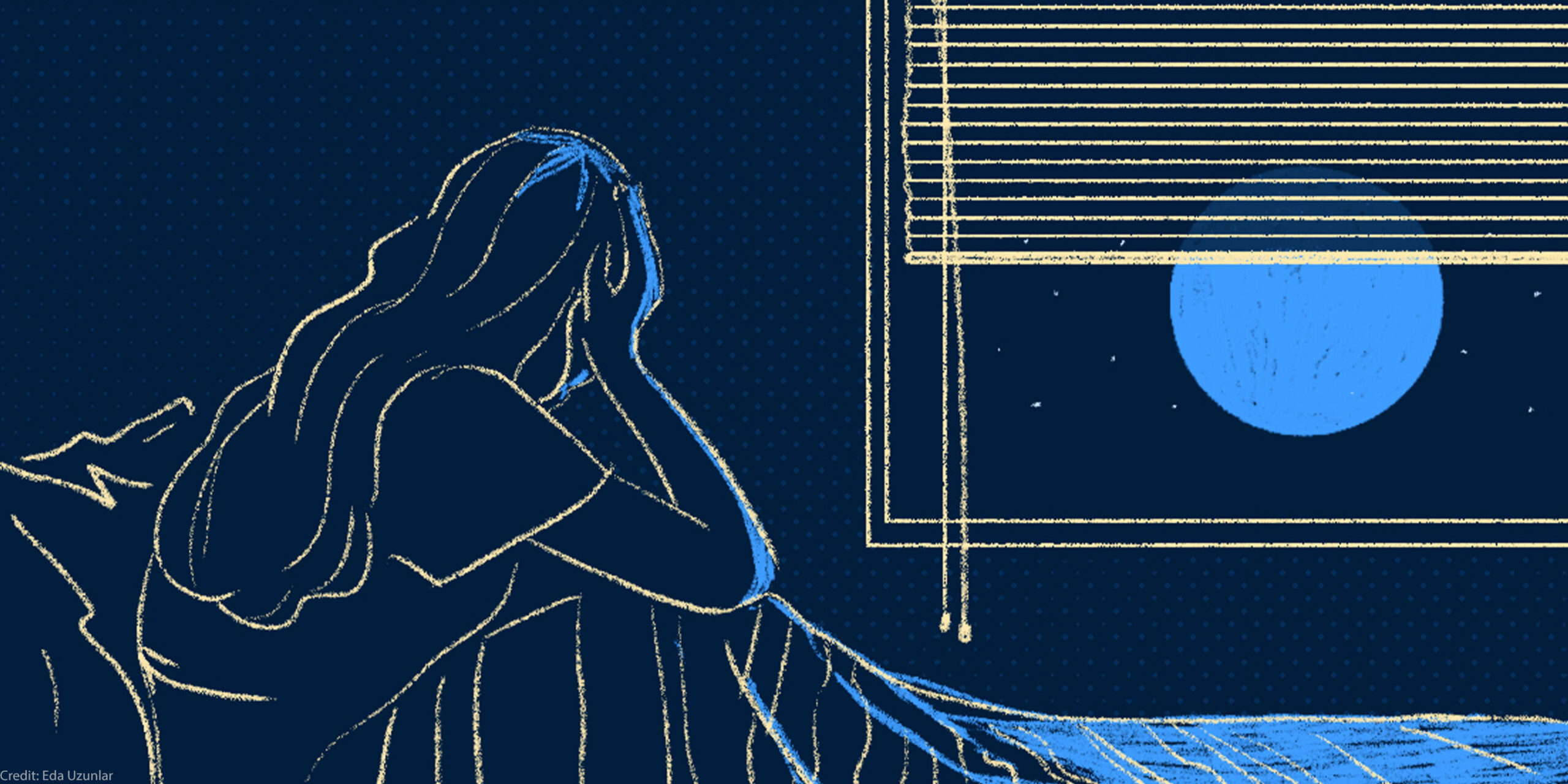
It took a split second for my whole world to come crashing down. 

My teammates on the University of Connecticut’s women’s soccer team were jumping and screaming and hugging each other. We had just won a championship game. It was one of the happiest moments of my life — my first championship win at the collegiate level. Without thinking, I flashed a middle finger in celebration as I embraced teammates on camera. I couldn’t have known that split-second, mindless gesture of celebration would cause UConn to suspend me from the NCAA tournament, revoke my scholarship, and completely upend my life as I knew it. All for a stupid mistake.

Right away, UConn issued a press release calling the middle finger “unsportsmanlike” behavior. I cried the whole way home through the airport, and apologized to my team. Luckily, my teammates were so supportive. But UConn was not finished punishing me. 

At that point, I knew I was suspended, but I didn’t really grasp what that meant until I tried to join my teammates in watching the NCAA selection show, which is always a big deal every year. I was essentially barred from seeing my team on campus. I wasn’t allowed to go to any team functions or even enter the locker room. I wasn’t allowed to wear any gear or to identify myself as a UConn athlete, either. And then over winter break, I learned that I had lost my full-ride scholarship. Without it, I could no longer afford to attend UConn. I had to transfer to another school with a partial athletic scholarship mid-year. That’s when I decided to take legal action against UConn. This was about more than a tournament, and even more than a lost scholarship. This was about discrimination on the basis of sex. UConn’s harsh punishment left me feeling ostracized. They attacked my whole identity as a career athlete. And I don’t think the same thing would have happened if I were a male athlete. 


Soccer has been my life ever since I first put my foot on a ball. I must have been about 4 years old. At 7, I joined my first team, and my dad coached me for years until I joined a premier team at 12. By that point, I knew I wanted to play soccer in college, and it was my dream to play for UConn before trying to play professionally. It seemed like I was on track to realize my dreams when UConn recruited me during my senior year of high school. But what the school did to me after the championship game made me feel disposable — like I was just a number on a jersey, the property of the school. 

All along, the subtext has been about “ladylike” behavior — something I didn’t know was expected of female athletes. I couldn’t help but wonder whether I’d receive the same treatment if I were a man. Maybe the incident would have been swept under the rug, or the coach might have had a word with me on the sidelines, if that. After all, I see male athletes do silly things that could be considered “unsportsmanlike conduct” all the time, and nothing ever happens. When men conduct “unsportsmanlike” behavior, they’re seen as passionate about their sport. But when a woman does the same thing, she’s perceived as angry or emotional, just throwing a fit. It isn’t fair, and it’s discrimination. 

In June, a district court ruled against me, rejecting First Amendment claims and arguing that UConn could not be liable under anti-sex discrimination protections in Title IX unless I was able to identify specific male players who had received more lenient discipline by the same coach and for the same conduct. I’m appealing the decision because it relies on a standard that’s impossible to meet. College players on single-sex teams almost never have the same coach. And there is plenty of evidence of male players on other teams engaging in even worse conduct that was not punished as severely, such as a male football player who kicked the ball into the crowd — potentially injuring people — and was given a 15-yard penalty, or a male soccer player who was accused of theft and required only to take remedial conduct classes.

I’m fighting not just for myself, but for other athletes that feel like they’ve been wrongly discriminated against, no matter their gender. I want all athletes to know that we’re not just numbers on jerseys, and we’re not school property. We should not feel powerless just because we’re up against a big university or institution. Athletes are people, we have a voice, and we deserve to speak up when we experience discrimination. 

Sex discrimination is still persistent and rampant in college and professional sports. Women athletes may find themselves on the wrong end of a stereotype — just like I was. Athletes who are trans may be barred from participating in sports teams that align with their gender. Discrimination harms us and prevents us from realizing our dreams. All athletes belong in sports, and no school should kick us out based on stereotypes and discrimination. 

https://www.youtube.com/embed/YR4tPYe-cJA

Date

Monday, December 14, 2020 - 12:00pm

Featured image

UCONN Soccer player and author Noriana Radwan is seen on the soccer pitch.

Show featured video/image

Hide banner image

Override default banner image

UCONN Soccer player and author Noriana Radwan is seen on the soccer pitch.

Tweet Text

[node:title]

Share Image

ACLU: Share image

Related issues

Free Speech

Show related content

Menu parent dynamic listing

20

Imported from National NID

38147

Imported from National VID

38195

Show PDF in viewer on page

Style

Centered single-column (no sidebar)

Imported from National Link

People with disabilities face enormous barriers in the United States today — from a pandemic that is killing disabled people, especially those in institutions, at staggering rates; to schools that too often fail, traumatize, and criminalize students with disabilities; to a criminal legal system that unnecessarily targets, incarcerates, and kills Black and Brown people with mental disabilities. The administration must make disability rights a priority from day one, with a commitment to addressing head-on these harms and the intersection of discrimination and marginalization around disability, race, and poverty.

Here are just a few of the many items that should top the Biden-Harris administration’s to-do list:

Ensure that people with disabilities can live in their communities, not in institutions, and support the direct care workforce:

  • People with disabilities have a right to live in the community as independently as possible, and to receive necessary services and support in their homes. But for  many people with disabilities, especially people of color, that right is far from a reality as they are segregated in institutions like nursing homes, intermediate care facilities, and psychiatric facilities — even though they could live in integrated community settings with appropriate supports. As COVID-19 ravages congregate care settings, killing people who live in these institutions at extraordinary rates, the dangers of living in institutions have been laid bare. The incoming Biden-Harris administration must implement a national strategy to expand access to Medicaid’s home and community based services (HCBS). HCBS funds the in-home support and services that let people with disabilities live safely in their communities. Long waiting lists for HCBS hinder many disabled people’s goals of getting out of institutions and living self-directed lives. The administration must end the long waiting lists for HCBS by providing more funding for these services, and must increase enforcement of laws that prohibit the unnecessary segregation of people with disabilities in institutions.
  • Along with eliminating HCBS waiting lists, the new administration must also push Congress to reauthorize and fully fund the Money Follows the Person program, which assists states to provide services and supports to disabled people in their communities. Money Follows the Person is critical for ensuring that people with disabilities can live self-directed, integrated, safe lives in their communities.
  • The administration must work with Congress to ensure that the safety and needs of the direct care workforce (e.g., home care workers, direct support professionals, residential care workers, nursing assistants) that provides services and supports to people with disabilities are prioritized during and after the pandemic. These workers, who are overwhelmingly women and disproportionately women of color, have labored in the shadows for far too long and must have access to PPE, sick leave, hazard pay, and other workplace protections.

Stop law enforcement’s disproportionate targeting of people with mental health disabilities, and the entrapment of people with disabilities in the criminal legal system:

  • As the recent killings of Walter Wallace Jr. and too many others have made clear, urgent action is needed to end the overreliance on police response to mental health crises that leave far too many Black and Brown disabled people injured, traumatized, or dead. The administration must encourage federal support for robust community-based programs that provide mental health professionals and peer supports — rather than law enforcement — to respond to mental health crises. 
  • Even if people with disabilities survive an initial encounter with police, the criminal legal system is stacked against them at every stage. Pretrial release, supervision, jails, and prisons all impose burdensome requirements that pose special challenges for many people with disabilities. People with disabilities are excluded from classes and programs in incarceration and find themselves unable to break free from the criminal legal system, which fails to take disability into account. The incoming administration must champion changes to the criminal legal system that reduce incarceration rates nationwide, lessen the risk of harm to people with disabilities, and provide the accommodations disabled people need to avoid incarceration and live safe, productive lives free of the criminal legal system.

Ensure that students with disabilities have access to effective and safe education:

  • Now more than ever, the administration needs to make sure that states and school districts continue to meet their obligation to provide appropriate educational services and assessments to students with disabilities. This includes helping them make up for instructional time and services lost during distance learning and school closures due to COVID-19. To support students with disabilities who have been left behind during the pandemic, the administration must make targeted Individuals with Disabilities Education Act (IDEA) funding a priority for the next congressional COVID-19 relief package. The Department of Education must also provide robust guidance that highlights best practices that school districts have adopted during the pandemic and ensures students with disabilities are not unnecessarily pushed into alternative schools during the pandemic.  
  • The administration also must stop the unnecessary and harmful restraint and seclusion of students with disabilities in schools by executive action and supporting appropriate legislation. Mechanical or physical restraints harm children and inflict lasting psychological trauma, yet their use still happens far too often in schools. Action is needed now to end these draconian practices and ensure that our schools are places where children feel safe to learn.
  • The overuse of police, known as school resource officers, in our nation’s schools disproportionately harms students of color with disabilities, criminalizes normal childhood behavior, and funnels students into the school-to-prison pipeline. The administration must take executive action and pursue legislative opportunities to eliminate federal funding that puts police in schools and reinvest those funds to hire school counselors, psychologists, and other supportive mental health personnel for our students. The administration must also investigate school districts where the data show disproportionate rates of law enforcement referrals and arrests for students with disabilities, and hold those school districts accountable.

Date

Thursday, December 10, 2020 - 4:45pm

Featured image

A wheelchair user holding a sign with the text "Disability rights = civil rights."

Show featured video/image

Hide banner image

Tweet Text

[node:title]

Share Image

ACLU: Share image

Related issues

Disability Rights

Show related content

Menu parent dynamic listing

20

Imported from National NID

38035

Imported from National VID

38050

Show PDF in viewer on page

Style

Standard with sidebar

Imported from National Link

Pages

Subscribe to ACLU of North Dakota RSS