
Immigrants' Rights Resource Hub
Last updated: February 4, 2026 05:01 pm
People who are immigrants are part of our families, communities, workplaces, and places of worship. Like many of us, they join the long tradition of coming here in search of a better life and the freedom and opportunity we offer. No matter what someone looks like, sounds like, or what their immigration status may be, they should feel safe in their own communities.
The Trump Administration and too many of North Dakota’s elected officials are undermining our shared values and threatening to violate our civil and constitutional rights. And this is not just about undocumented immigrants. This is about every immigrant in North Dakota — citizen, resident, or otherwise — who now has to wonder if going to work, speaking another language, or just trying to exist in our state makes them a target.
The ACLU of North Dakota will always fight for the rights and dignity of immigrants and their families, and we need you with us. Below is information and resources for immigrants, their families, and supportive community members who want to get involved.
Know Your Rights
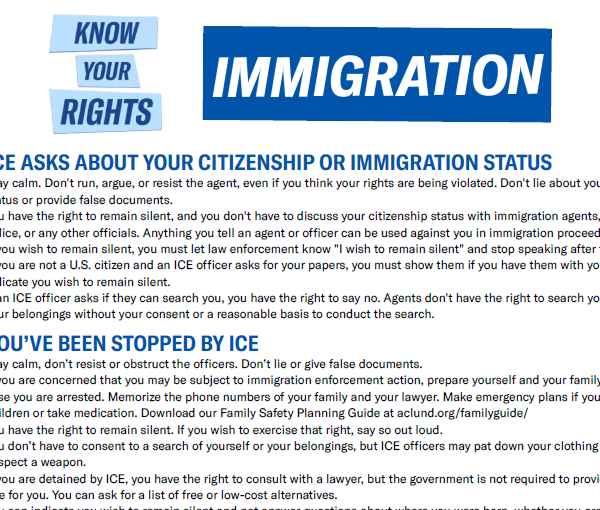
Know Your Rights: Printable Flyer
Take your rights on the go with this printable flyer that explains your rights when interacting with and observing ICE.
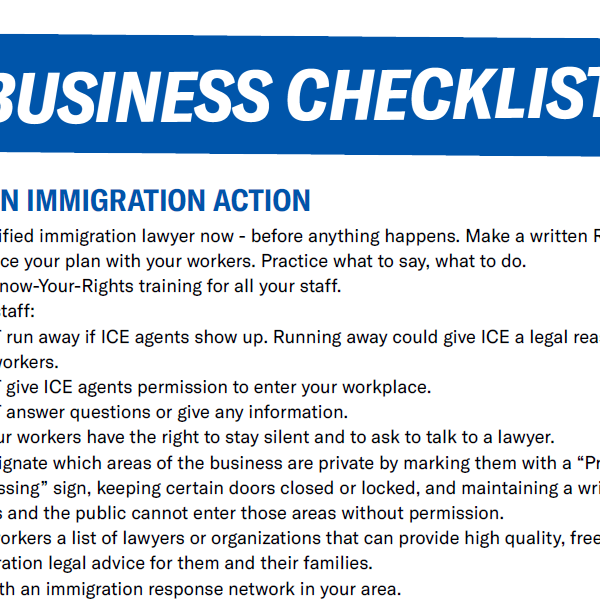
Know Your Rights: ICE At Work, Business Checklist
This printable Know Your Rights flyer explains your rights if interacting with ICE at your place of work and a checklist for business owners to ensure they are keeping their employees protected.
Know Your Rights: Warrants
ICE must have a valid judicial warrant signed by a judge to enter your home or business. Here's how to identify a judicial warrant.
Family Safety Planning Guide
As arrests of immigrants increase across the country, it is important that you and your family know your legal rights and have a safety plan in place in case of an emergency. A Family Safety Plan is a collection of information and documents that can help a family in an emergency. This guide will help you create a Family Safety Plan in case you are arrested or deported by Immigration and Customs Enforcement (ICE).

Red Cards
Red Cards are small, printable cards designed by the Immigrant Legal Resource Center to help immigrants and citizens assert their constitutional rights during interactions with law enforcement or ICE agents. They outline rights like staying silent, refusing searches, and requesting an attorney, allowing for a respectful, non-verbal assertion of rights.
Other Partner Resources
Stay Informed
Sign up to be the first to hear about how to take action.
By completing this form, I agree to receive occasional emails per the terms of the ACLU’s privacy statement.
By completing this form, I agree to receive occasional emails per the terms of the ACLU’s privacy statement.